Watershed
A policy and AI intervention that traces harmful online rhetoric as a predicator of self or community harm.

How might New York City
safeguard young New Yorkers'
mental health and continuously respond to the changing
health needs of the city?
Policy
Strategist / Researcher
2024 (5 mos)
Partner and Client Overview

Public Policy Lab
Policy and Service Design Studio based in New York City.
NYC Office of Community Mental Health
Advances community mental health in New York City.
Mental health is evolving, and policymakers need to adapt.
By 2039, how might policymakers and key health officials react or adapt to the changing mental health landscape in New York City?
The challenge was developing strategies for policy makers to address mental health in NYC at a systems-wide level.
With this, we merged policy with health intervention, designing systems for the community and for government officials.
The Research
The team first wanted to understand and research on the current situation on community mental health in New York City.
Desktop research, interviews with medical experts were the first step. We wanted a strategic intervention that could be beneficial to a number of people, specifically the youth, in the city.
Mapping Exercises
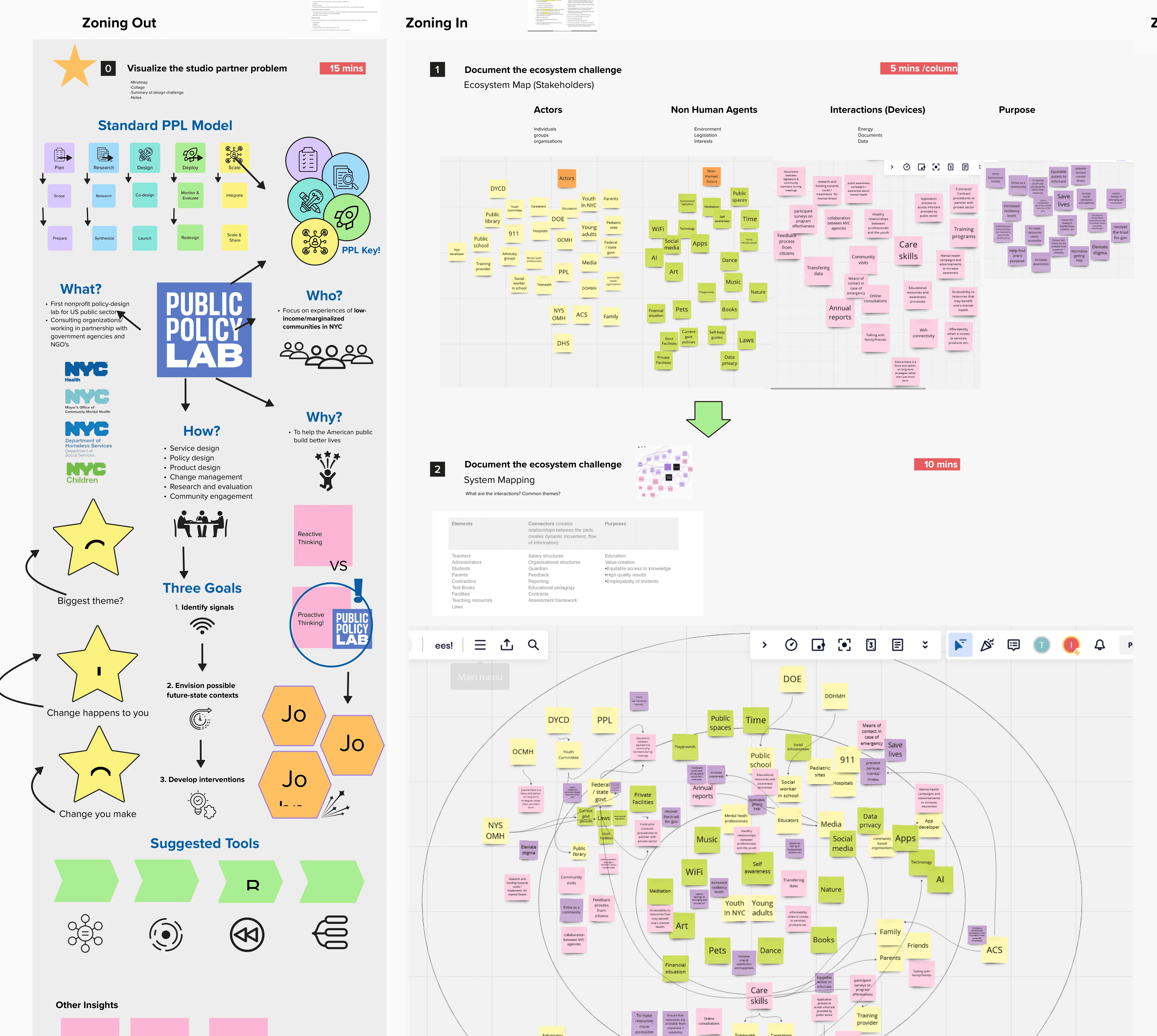
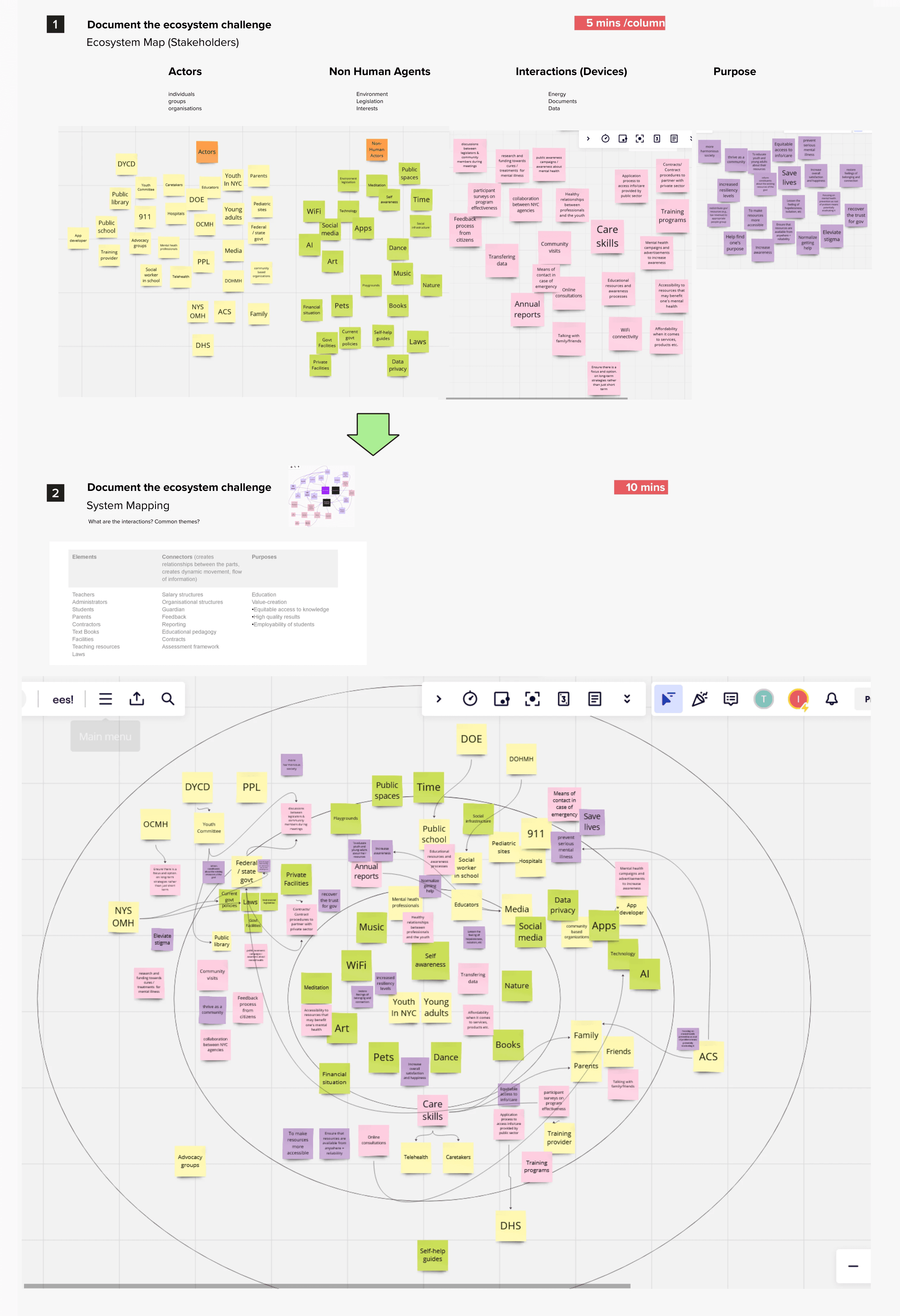
An ecosystem map was first used to understand the stakesholders at large. In addition, an empathy map, domain map, and assumption map were also utilized to understand:
Stakeholder needs
Key concepts currently present
What the team might prioritize in terms of strategy and research
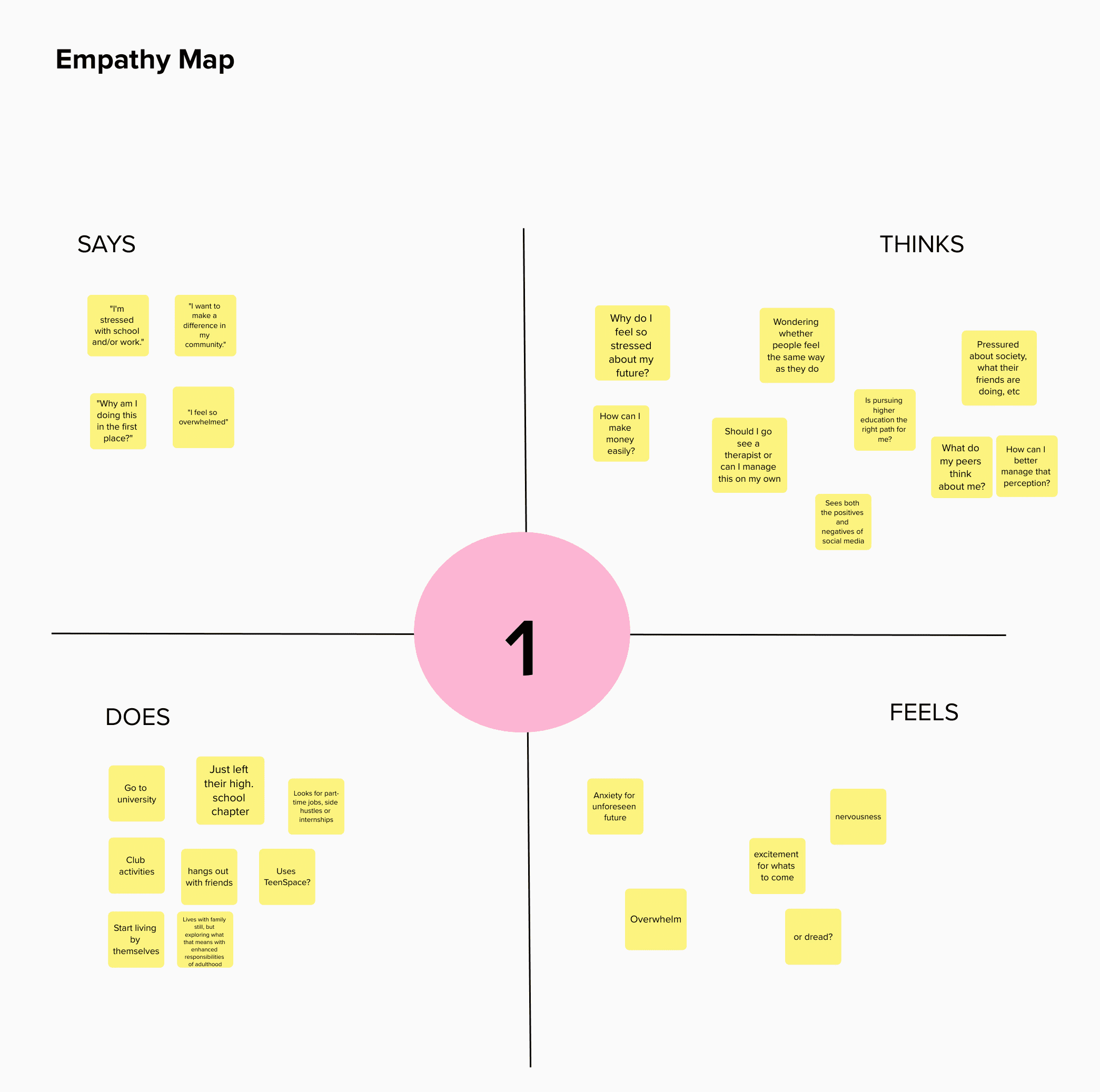
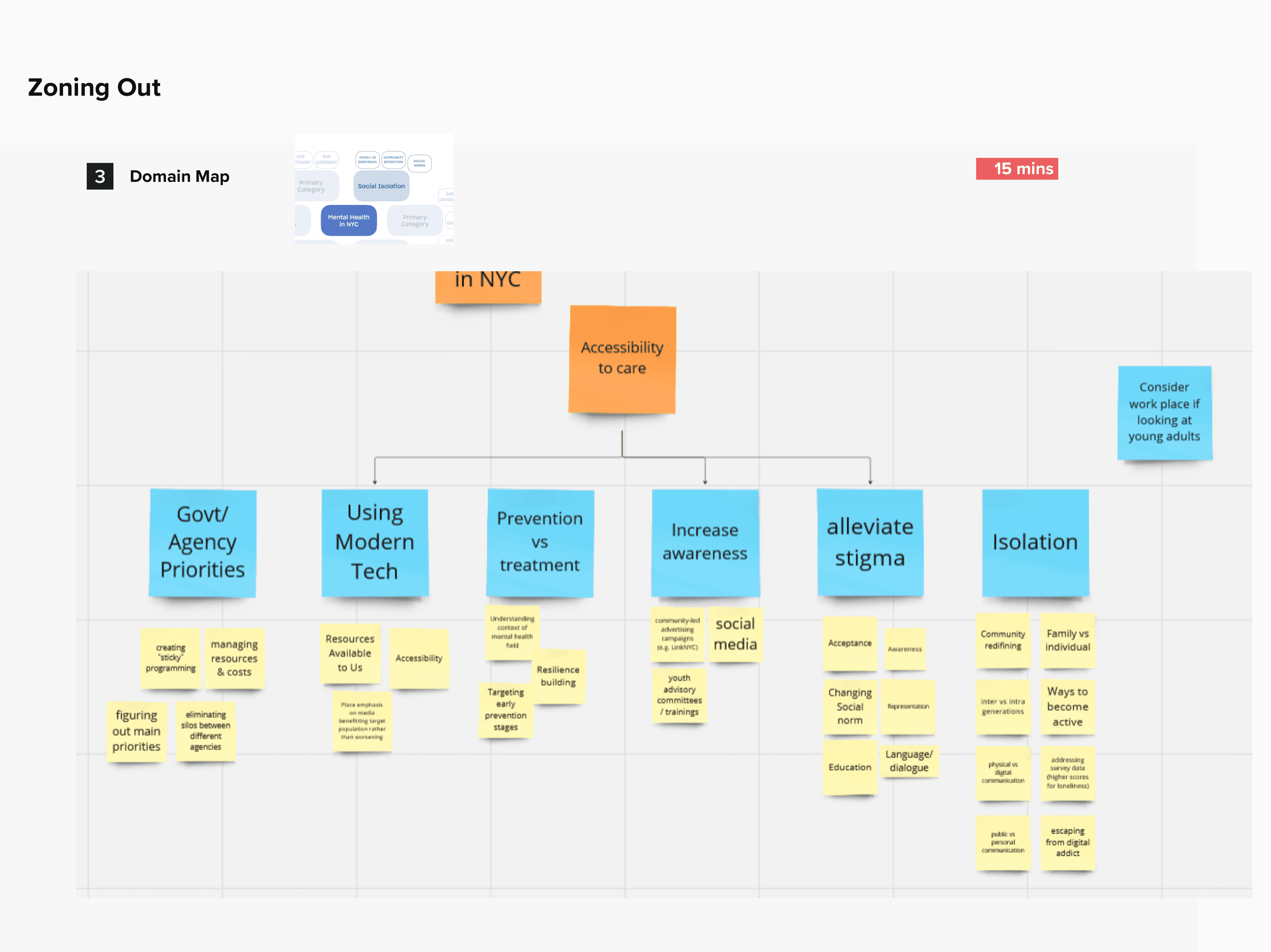
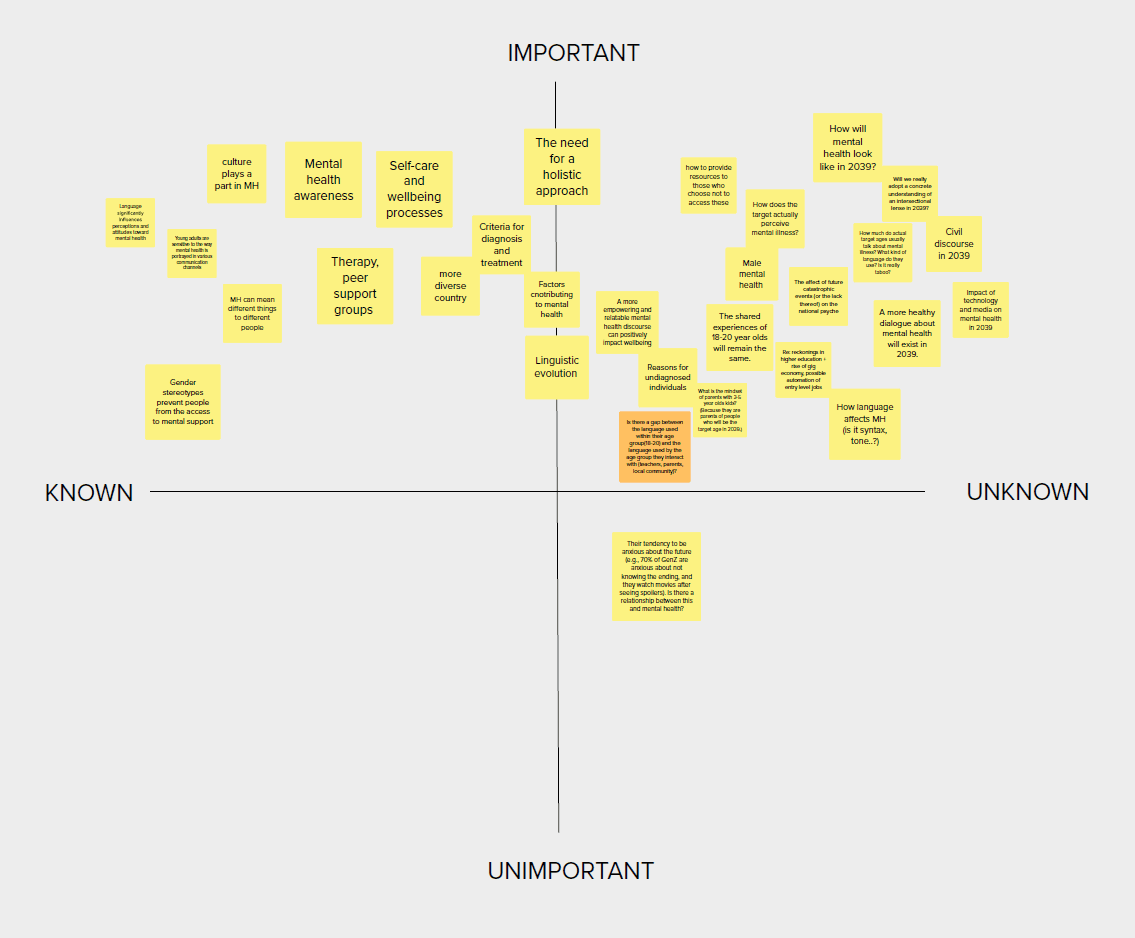
We also had to pivot.
However, we also had realized that we were looking at mental health issues only at a clinical perspective. If we wanted to look deeper into the causes of mental health issues, we also had to explore other factors, other aspects of life for a young New Yorker.
Searching the City: 200+ Signals
Mental health can also be affected by many factors, and information regarding this can be found even beyond the medical field. We then looked at data and trends from multiple industries and spaces in New York City. How else could mental health be affected in the city?
Each team member gathered 50+ trends and "signals" from around the city, looking at how different artifacts could affect wellbeing. Over 200+ "signals" were collected and analyzed.
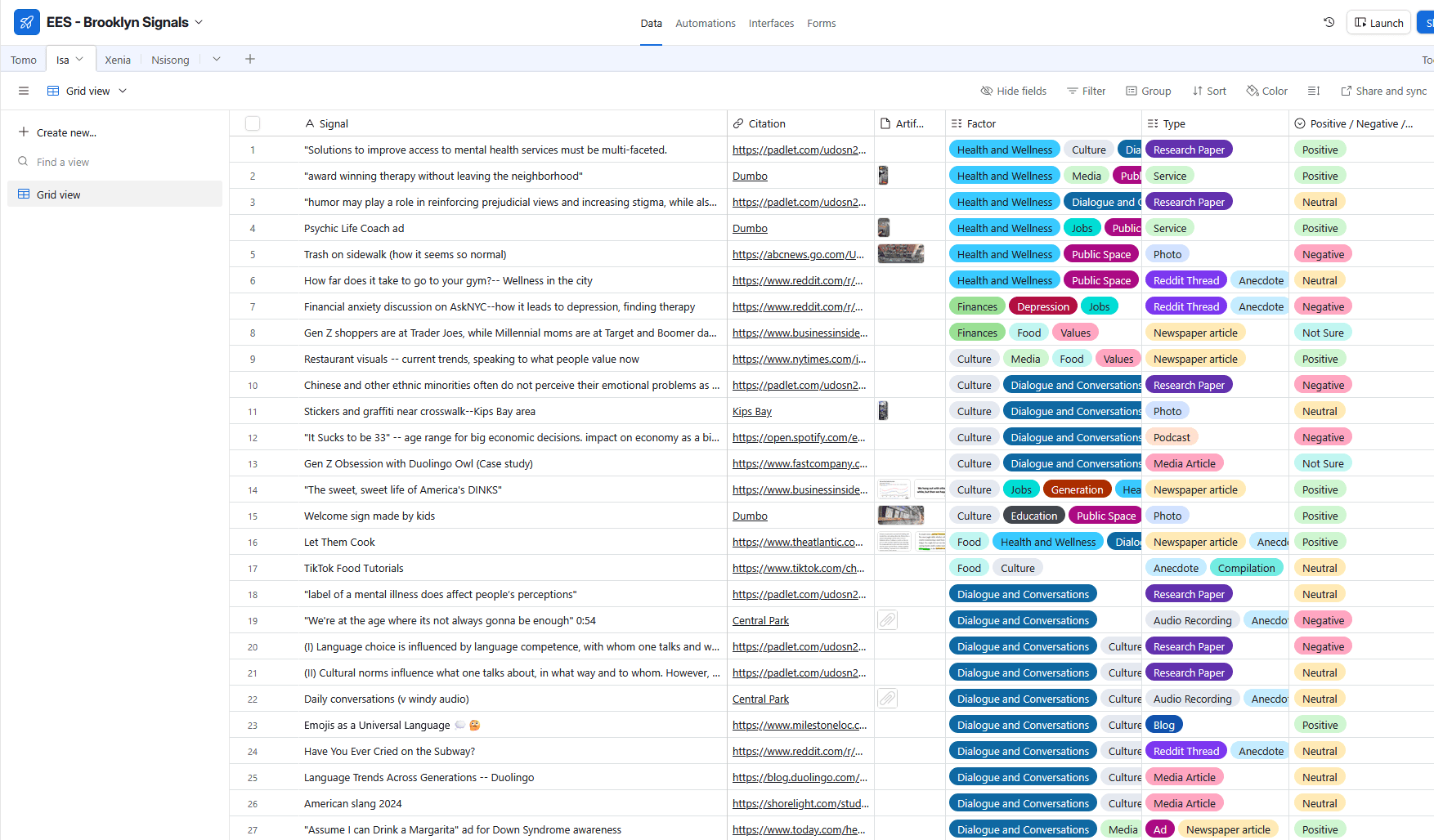
Gathering Insights, Emerging Themes
Combining our conversations with our interviewees, our desktop research, and the collected signals around the city, we summarized our data into five emerging themes, which were present both in the conversations and the signals.
Humor as Avoidance
Using memes and humor for self-preservation.
Anticipatory Anxiety
Anticipating fear and anxiety, causing to overwork or overwhelm one's self.
Self-Authenticity
Expressing honesty and authenticity online.
Chaos & Choice Abundance
Becoming overwhelmed, paralyzed with consumption or choices available.
Craving Simplicity
Preferring silence or simplicity in the space of technology.
Reinviting Agency over Mental Health
From these five emerging themes, it was clear that language, dialogue, conversations, in the verbal and visual manner, were key factors in one's mental health. The online space, increasingly became a person's own third space.
This meant, however, that there is increased exposure to heavy social media consumption, which can lead to noise, addiction, or neurotoxicity.
From this, there is an increased desire for individuals to reclaim their third spaces, their agency over mental health.
Looking at it from a policymaker's perspective, there needs to be a method to counteract consequences of neurotoxicity.
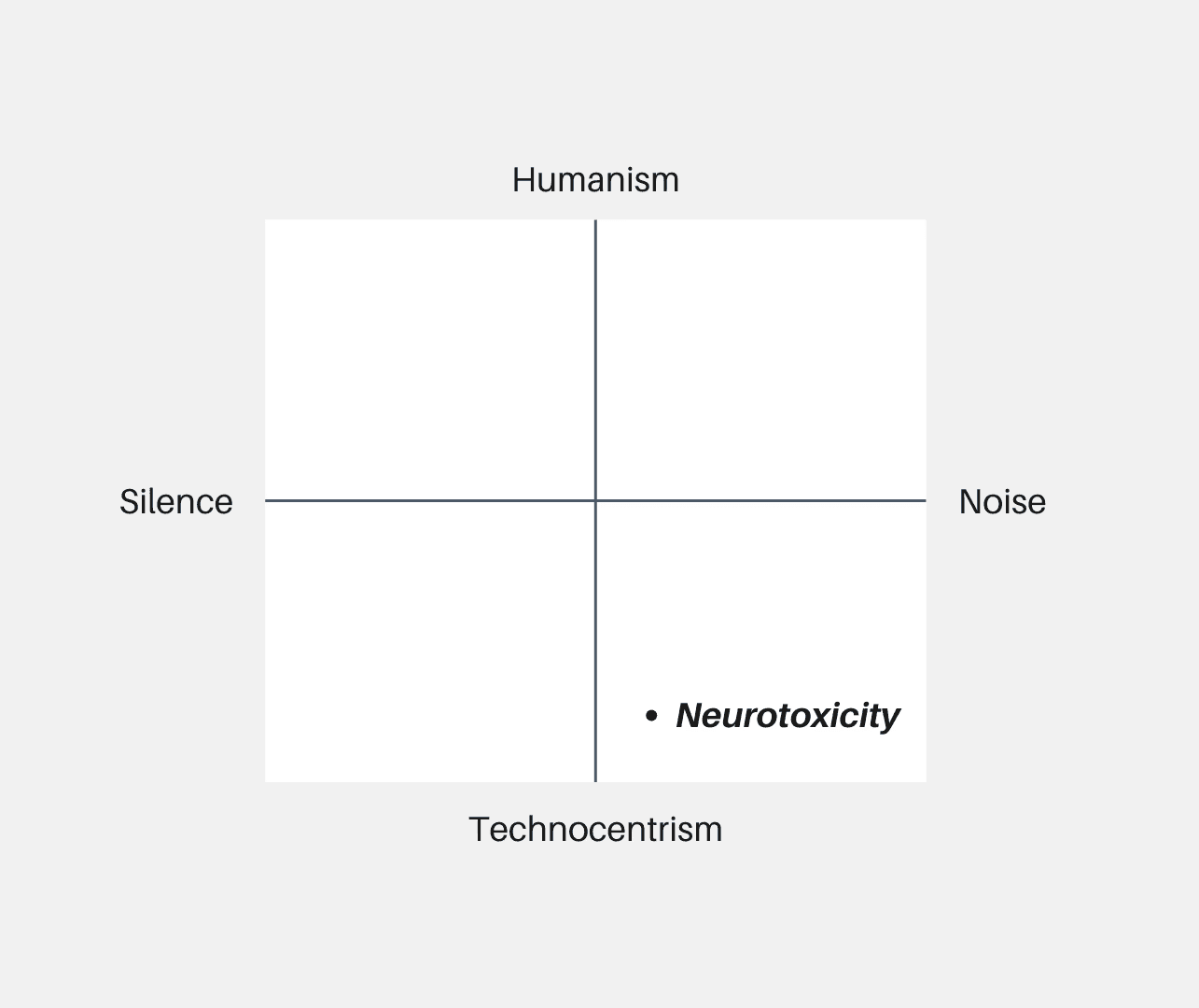
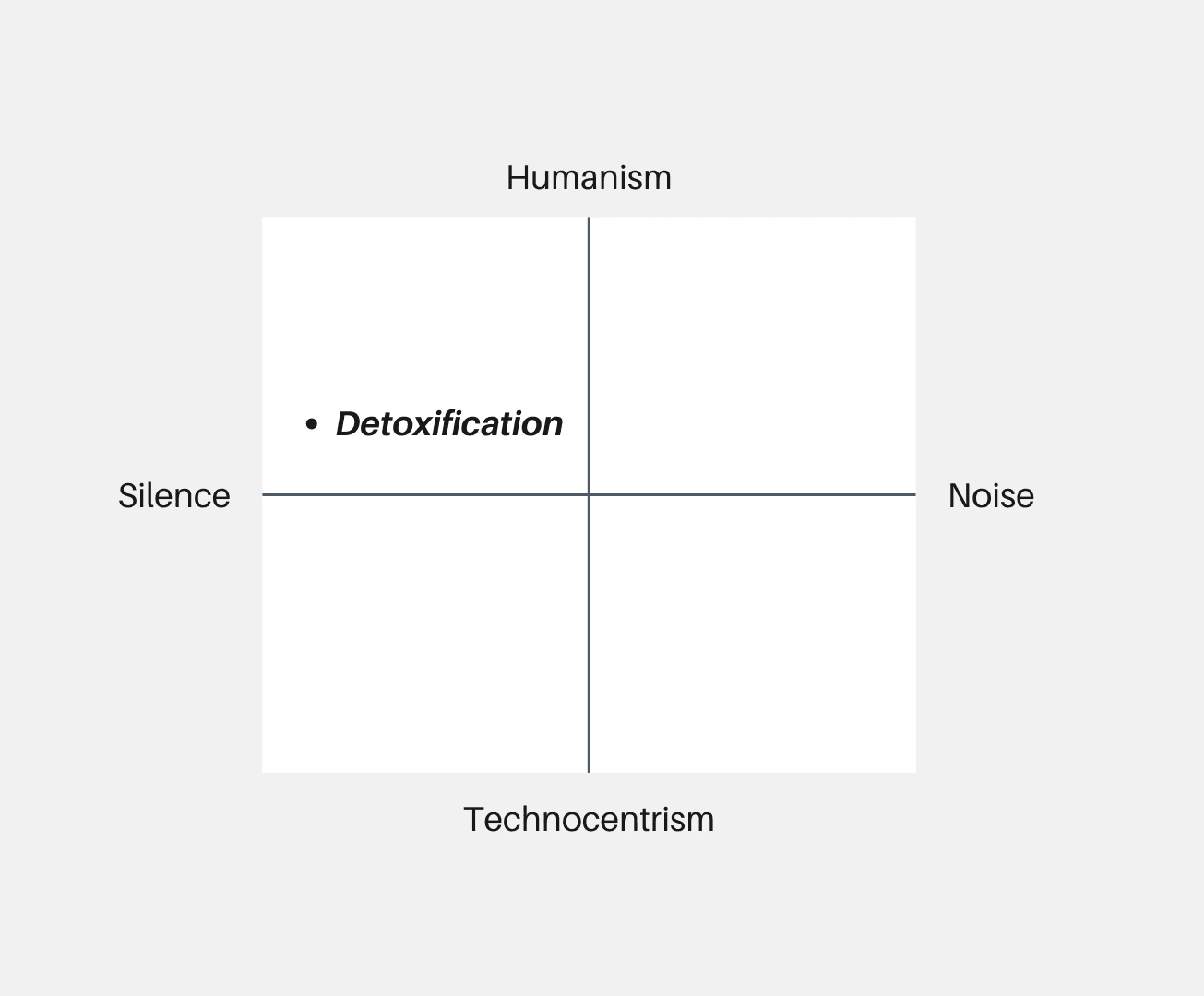
What if we could reframe early indicators of neurotoxicity?
Early identification of indicators can be invaluable in proactively addressing mental health challenges and providing timely support and resources to those in need. While online dialogue can be viewed as early indicators of mental strain, it can also be utilized as a way to understand wellbeing.
From neurotoxicity, we can bring in detoxification instead.

Our Solution Space
Integrating the power of language and dialogue as a biometric tool in proactively safe-guarding mental health and wellbeing.
Testing the Waters
By understanding existing patterns and signals in online conversations and dialogue, we get an understanding of how young New Yorkers currently feel or react, giving a glimpse to mental health conversations in the city.
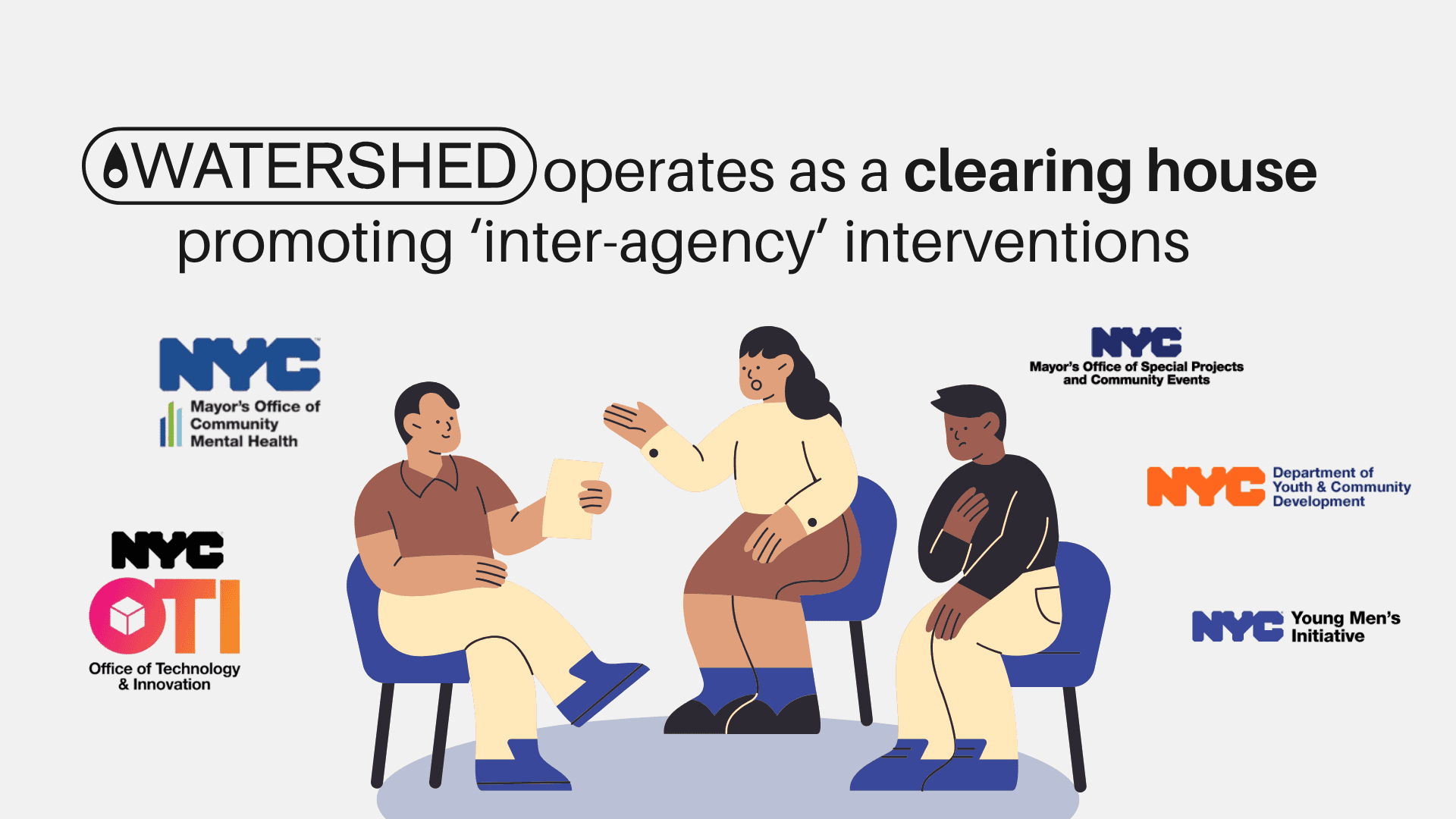
Enter Watershed, a policy and AI intervention meant to trace pathogenic rhetoric online as a predictor of self or community harm, fostering safer and healthier digital environments.
How it Works
Watershed collects publicly available data, sifting the internet for signals on health. Once the signals go through a threshold, it alerts subject matter experts and health officials around the area regarding the signals.
1. Data Collection
Watershed detects early indicators of mental health issues through verbal and visual signals on social media.
2. Passing a Threshold
Once a signal passes a threshold, an automatic alert is sent to relevant experts who assess and validate data collection findings.
3. Alerting Experts
Experts assist in leveraging existing neighborhood interventions and identifying gaps within them. Prioritization of funding allocations are also generated by AI.
4. Resolution
Interventions are appropriately implemented, along with progress tracking.
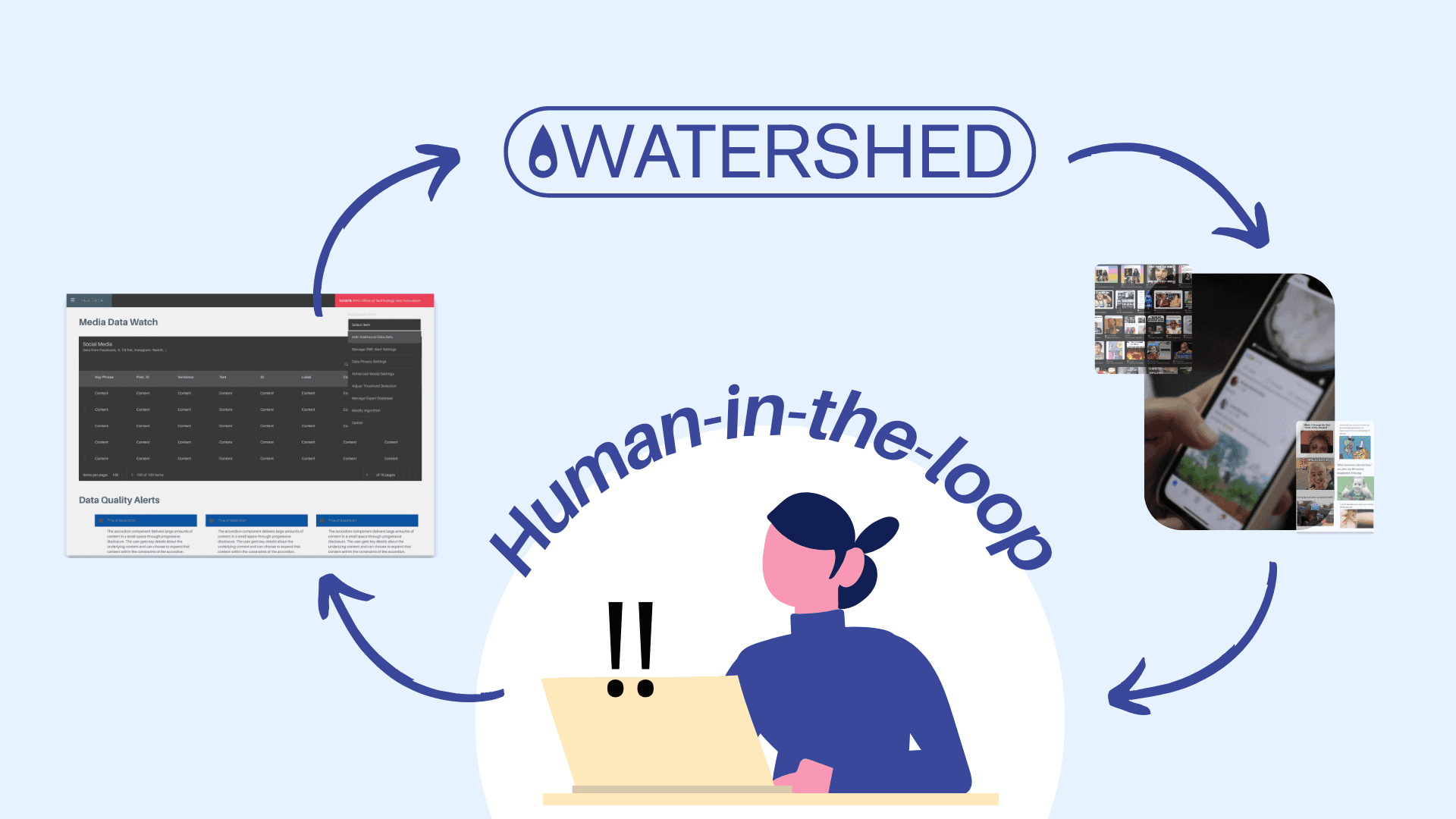
Human-in-the-Loop
Watershed continuously analyzes behavioral signals and patterns in real-time. It also integrates a human-in-the-loop (HITL) approach is a collaborative strategy that incorporates human input and expertise into the development of impactful AI systems.
Key Challenges to Implementation
Bringing in AI to a public agency also brings in some challenges. The team also considered the following questions for future research and process creation.
Data Handling and Privacy
To utilize data for social good while still protecting individual privacy
AI Accuracy improvement
To capture the expressions of human mental states that AI alone cannot fully measure
Public Acceptance and Trust
To overcome resistance to AI and collaboratively integrate this solution into society
Reflection
Integrating the use of AI in public health and government use, especially in community mental health should be managed and handled properly. While this may be a proposal for the future—in 15 years to be exact— working on this project has allowed us to utilize AI to our advantage, and at the smae time, be wary of its limits and ethical constraints.
As a strategist and as a designer, Watershed brings a light on how AI might become a city-wide tool that could benefit younger audiences.