Stir-Fri
Improving consumption and spending habits through the grocery experience.
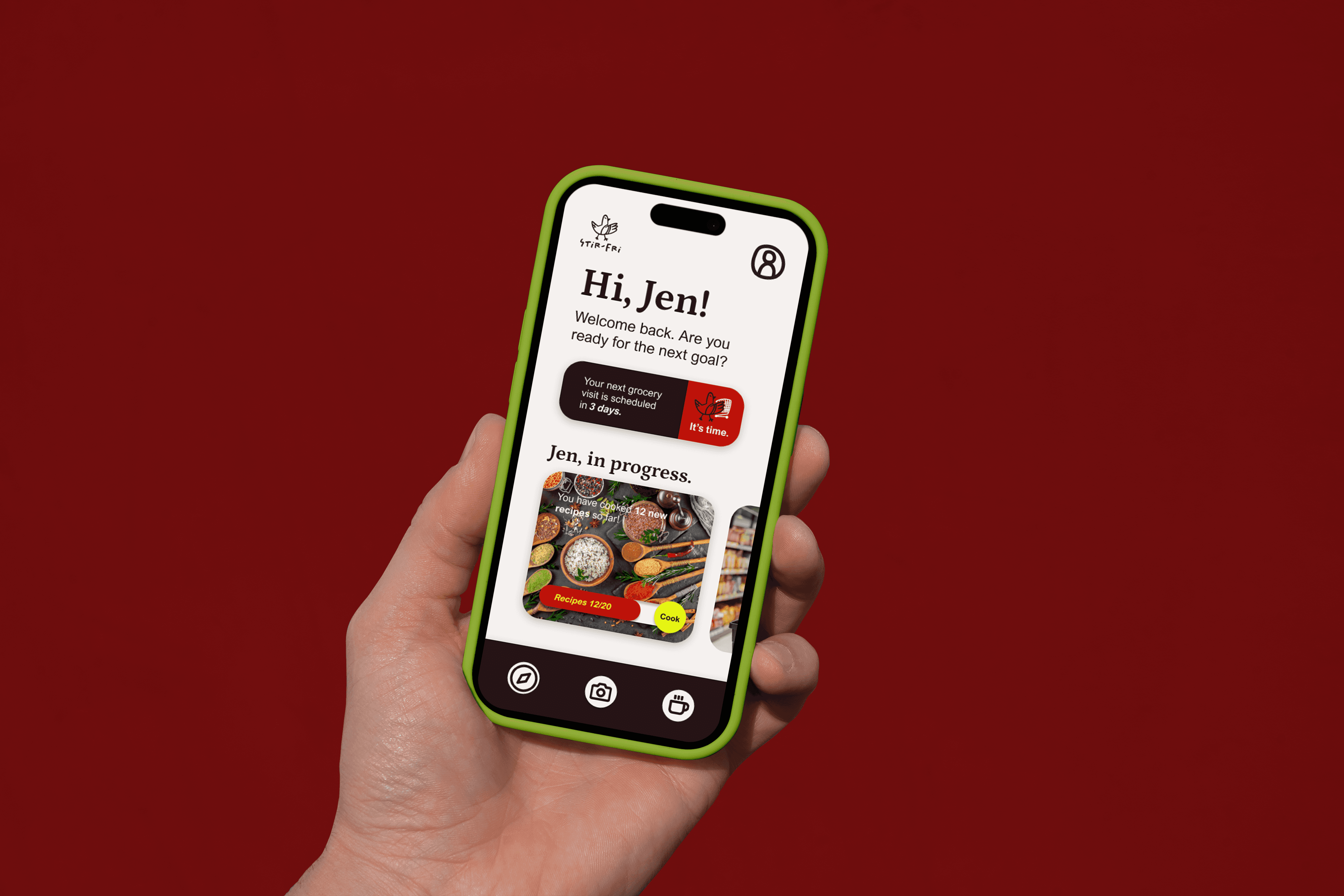
How might we invite shoppers in NYC
to habitually track
their grocery habits and improve their spending and
consumer behavior?
Food & Bev
Strategy
UX
Strategist / UX Designer
2025 (5 mos)
Grocery shopping can be stressful, overwhelming, and expensive.
In New York City, groceries per person can reach $500 a month. Combine that with daily expenses, rent, and personal expenses, it can add up quickly.
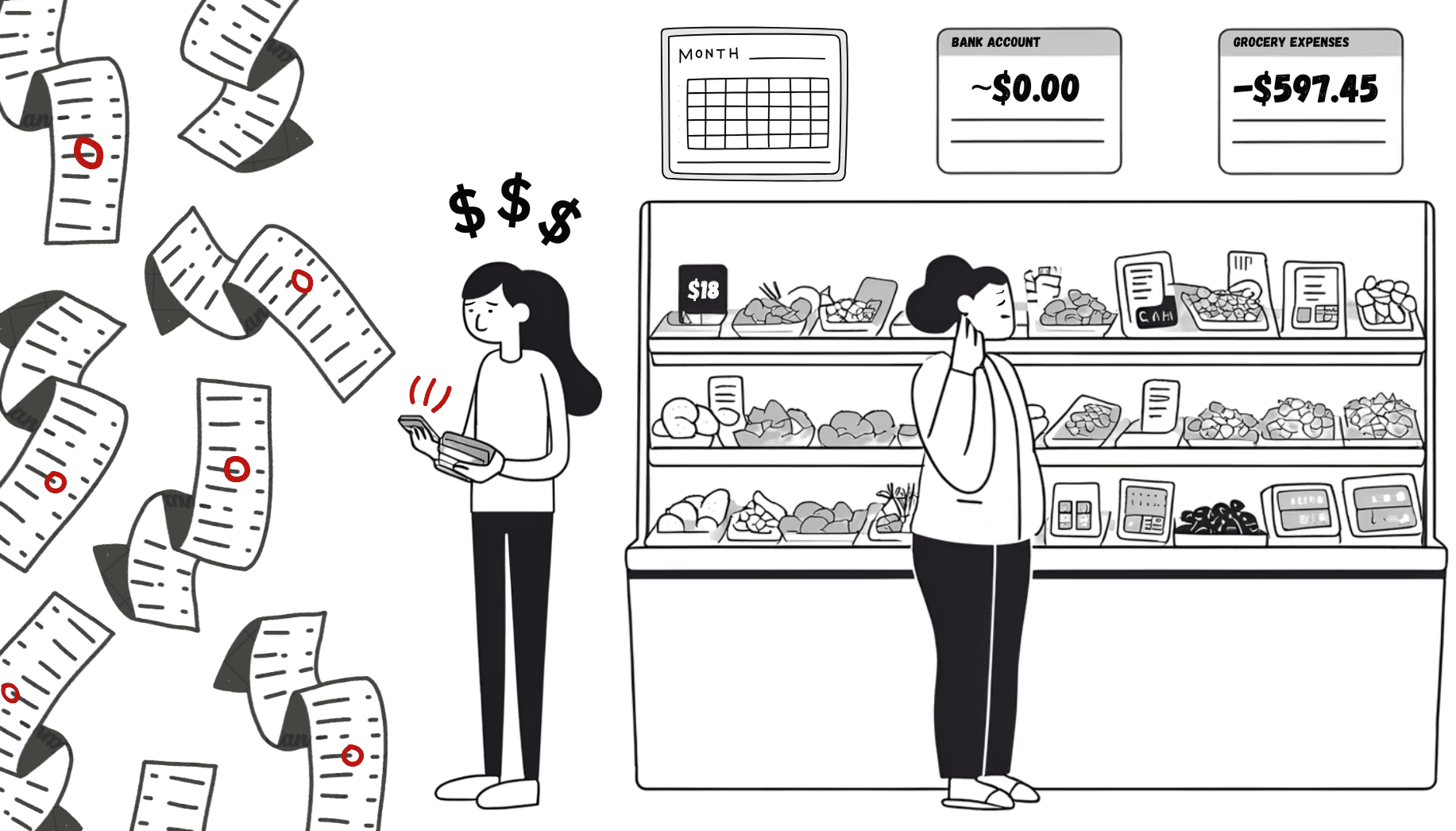
It can also be wasteful.
From our research, 54% of the city's food waste also come from city households. 4 million tons of food waste is also food scrap being disposed in landfills.
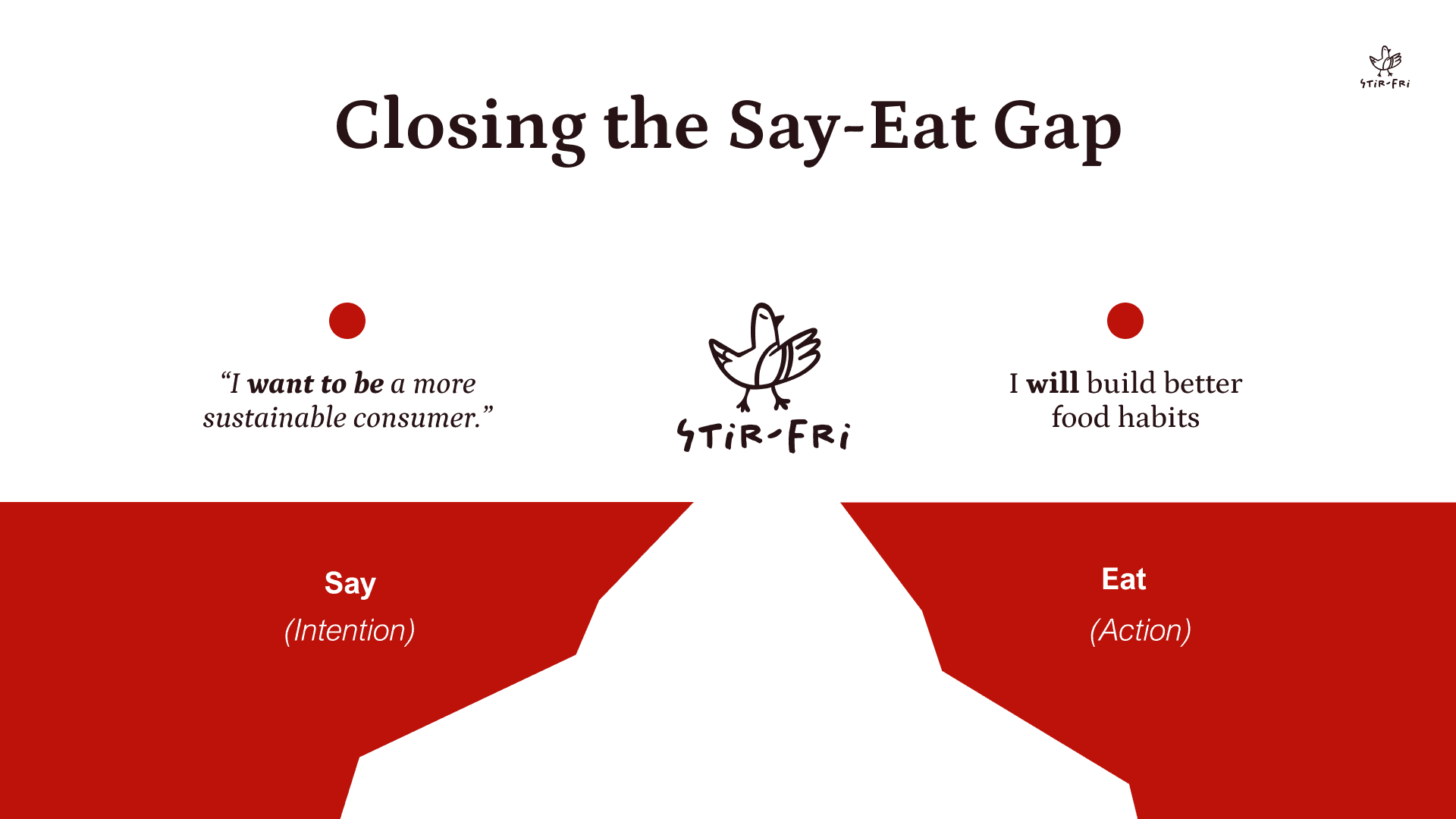
While younger generations are also considering sustainability in their food consumption habits, there is still a gap in action and intention.
During our research into consumer consumption patterns and consumer behavior, we noticed that the top three motivators for consumer are Taste, Price, and Convenience despite valuing sustainability.
Bridging Action & Intention.
The challenge was closing the Say-Eat gap, bring intention to action closer. Consumers said they valued sustainability and better consumption habits, but there was a lack of action towards doing so.
The Research
We wanted to understand the real needs, habits, and motivations of young New Yorkers. We asked: What’s stopping people from living more sustainably? What would actually help?
Research was conducted through:
18
Focus Interviews with Consumers
12
Interviews with Behavioral Scientists & Sustainability Experts
40
Survey Participants
4
Workshops
4
Events
390+
Hours on Desk Research


Key Realization & Opportunities
From the research, we saw three key realizations the project.

Say-Eat Gap
Watershed detects early indicators of mental health issues through verbal and visual signals on social media.
Urban Constraint
Time, convenience, and financial limitations prevent them from matching actions to intentions.
Rethink Values
Waste reduction and efficient use of grocery budget is a form of money saving.
Pain Points
There were also pain points, mainly focused on proximity, price, access to information, or habits.
Busy Lifestyles & Convenience
Limited time to plan, research, and make sustainable grocery choices.
Lack of Knowledge
Uncertainty about how to maximize the use of purchased food to reduce waste.
High Effort to Change Habits
Resistance to added mental load and information overload when adopting sustainable practices.
Understanding the Market
We focused on consumption and food. The food and beverage industry, specifically the grocery industry in NY can value to $50 billion. The team looked at different market opportunities, scanned the landscape and focused more on Gen Z, mainly also because the research was more focused on this audience, and how they viewed sustainability in consumption.
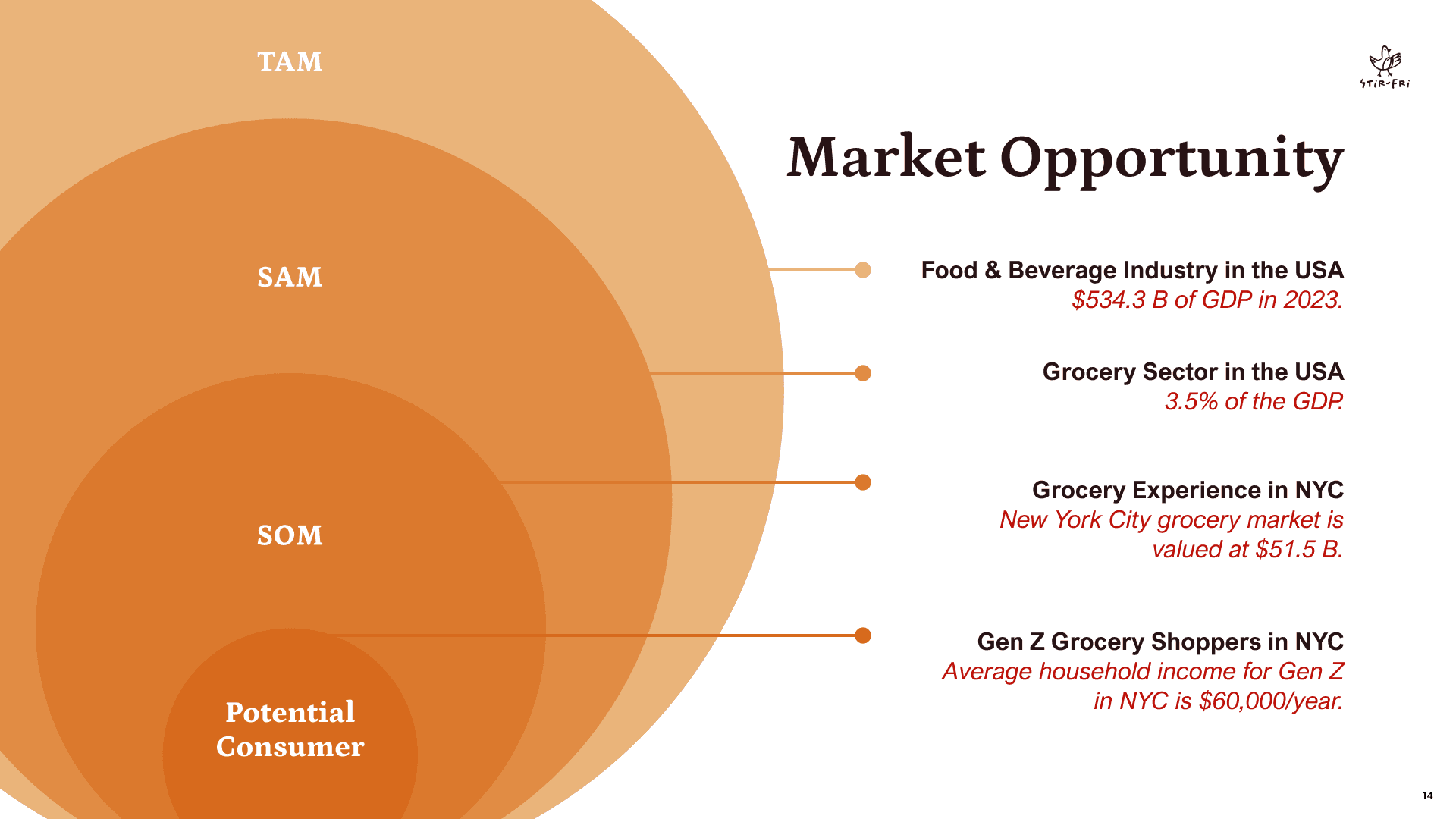
Value Mapping & Consumer Analysis
We did comprehensive research on value mapping, market research, and landscape analysis. We set our focus on grocery shoppers with busy lives but consistent habits.
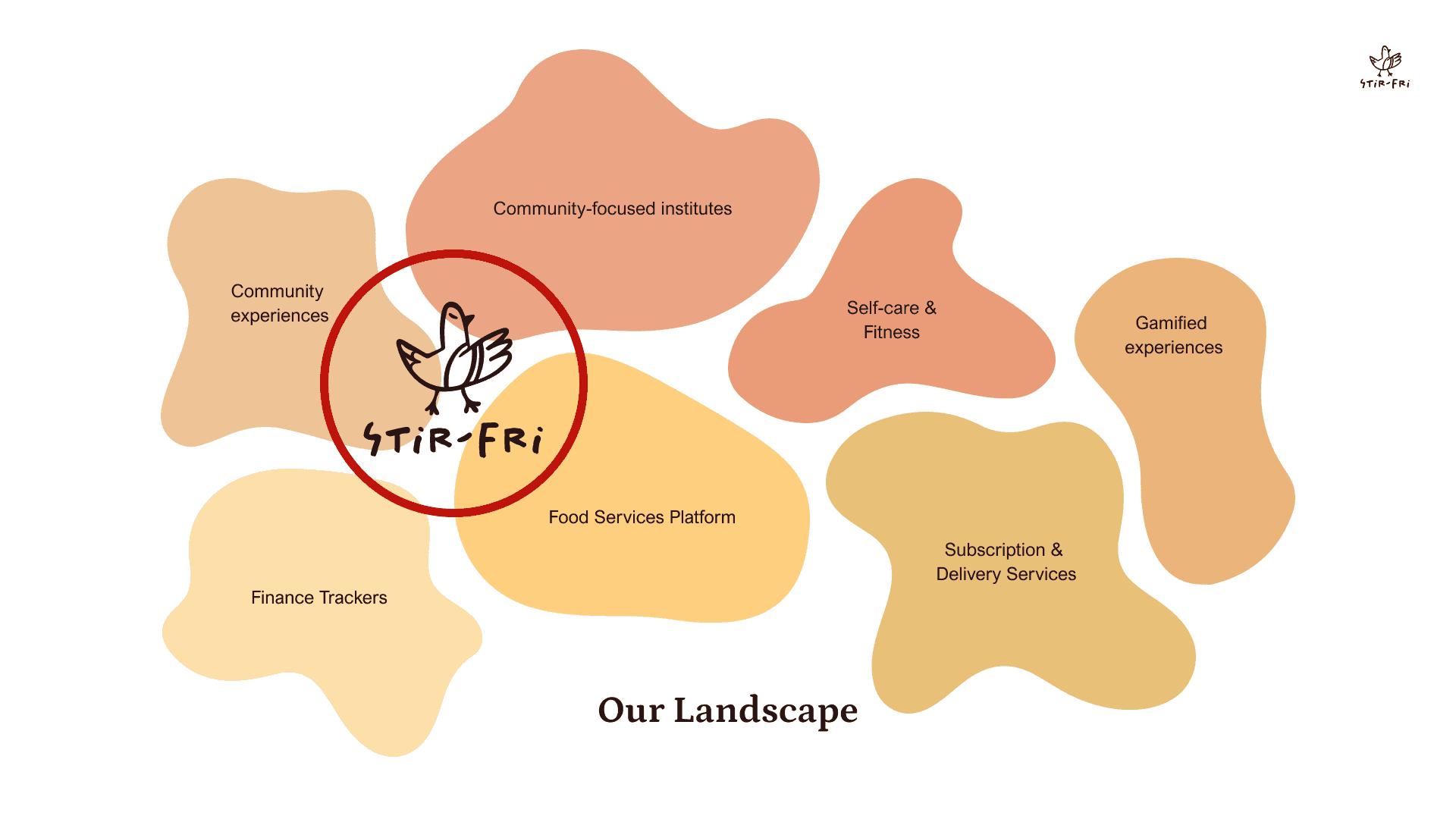
We wanted to look at daily experiences, focusing on high impact experiences, with a lower effort barrier.
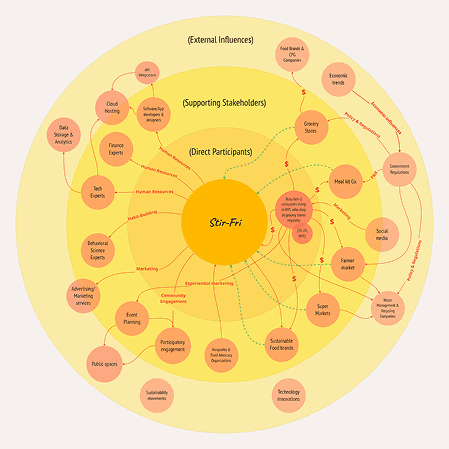
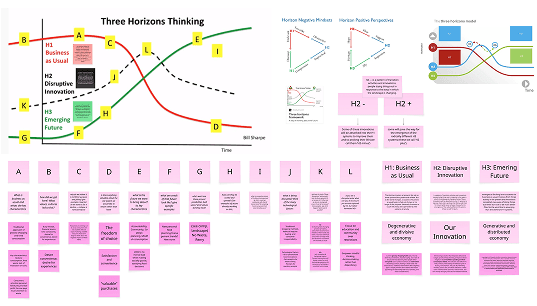
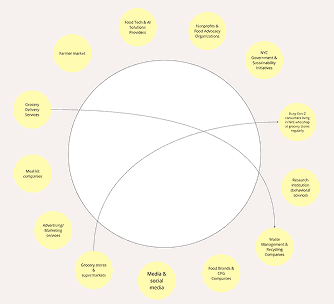
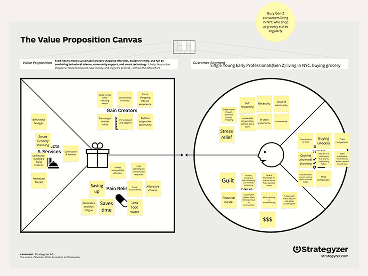
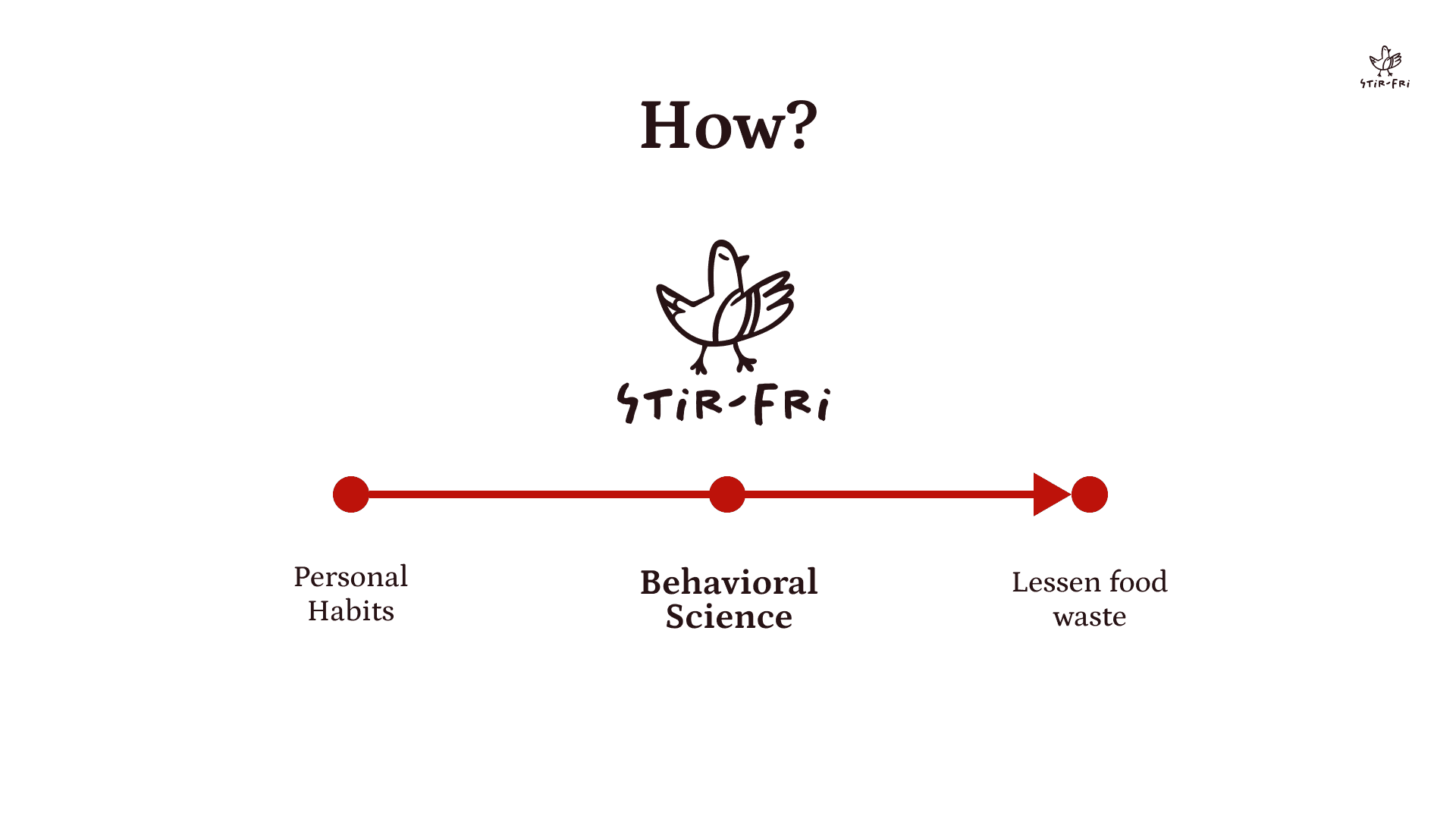
Insight: Closing the Say-Eat Gap through changing habits & behavior can easier be done by small nudges
By utilizing behavioral science, and in this case, the concept of nudges, changing personal behavior can be done in a manner that feels frictionless, and part of everyday life.
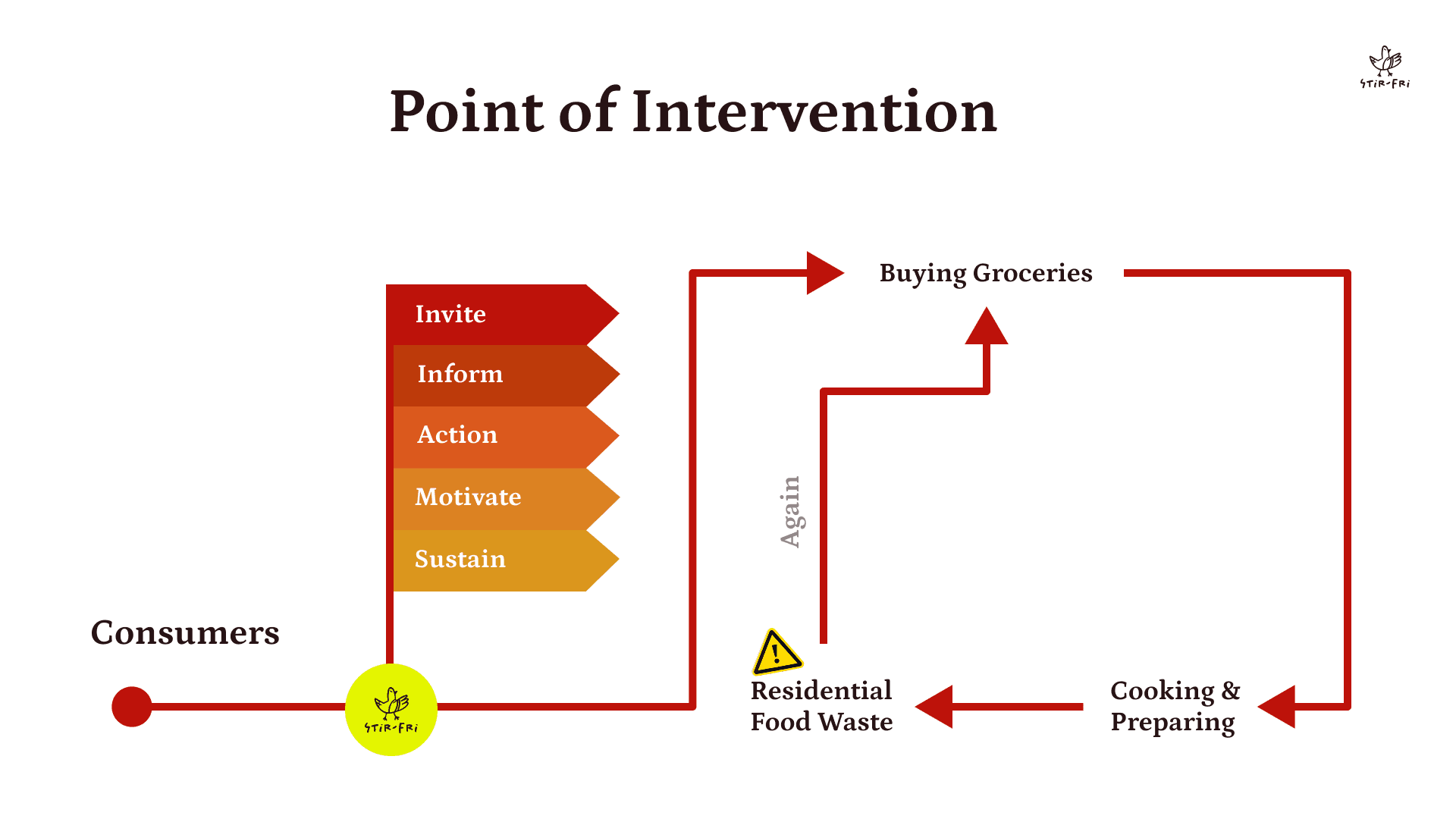
Transforming the Grocery Experience: Stir-Fri starts even before you buy your groceries.
By engaging Gen Z shoppers through everyday activities such as the grocery experience, consumption and spending habits can change, if the nudges are done well (that's us!).
For Stir-Fri, the point of intervention begins even before you buy, centering it at habit formation as shoppers go about their daily habits.
Prototype
Try the prototype here:
Intervention Strategy
Stir-Fri's framework has 5 steps, with the main goal of improving consumption and spending habits.
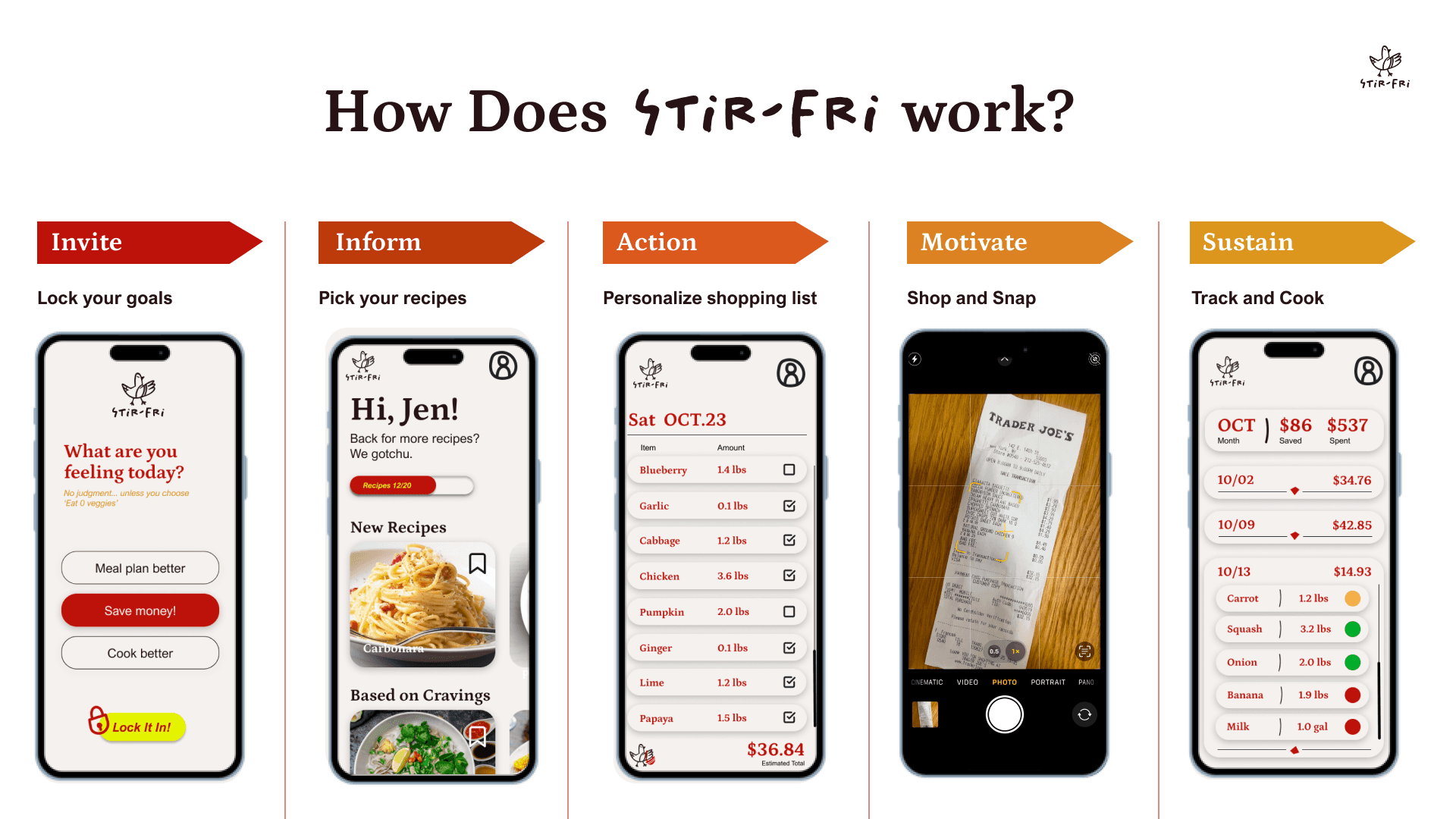
Invite
The goal is to first Invite the shopper to build their habits.
Inform
Aligning shopper habits to recipes and grocery tips that fit their lifestyle.
Action
Stir-Fri then becomes your personal guide, creating a customized shopping list for you.
Motivate
Once the shopper gets to do their groceries, Stir-Fri documents their spending and consumption through receipts & cart images.
Sustain
Then, the habit-changing becomes consistent. It then tracks your goals, habits, expenses, and utilizes this for the next grocery run.
Setting Stir-Fri Apart
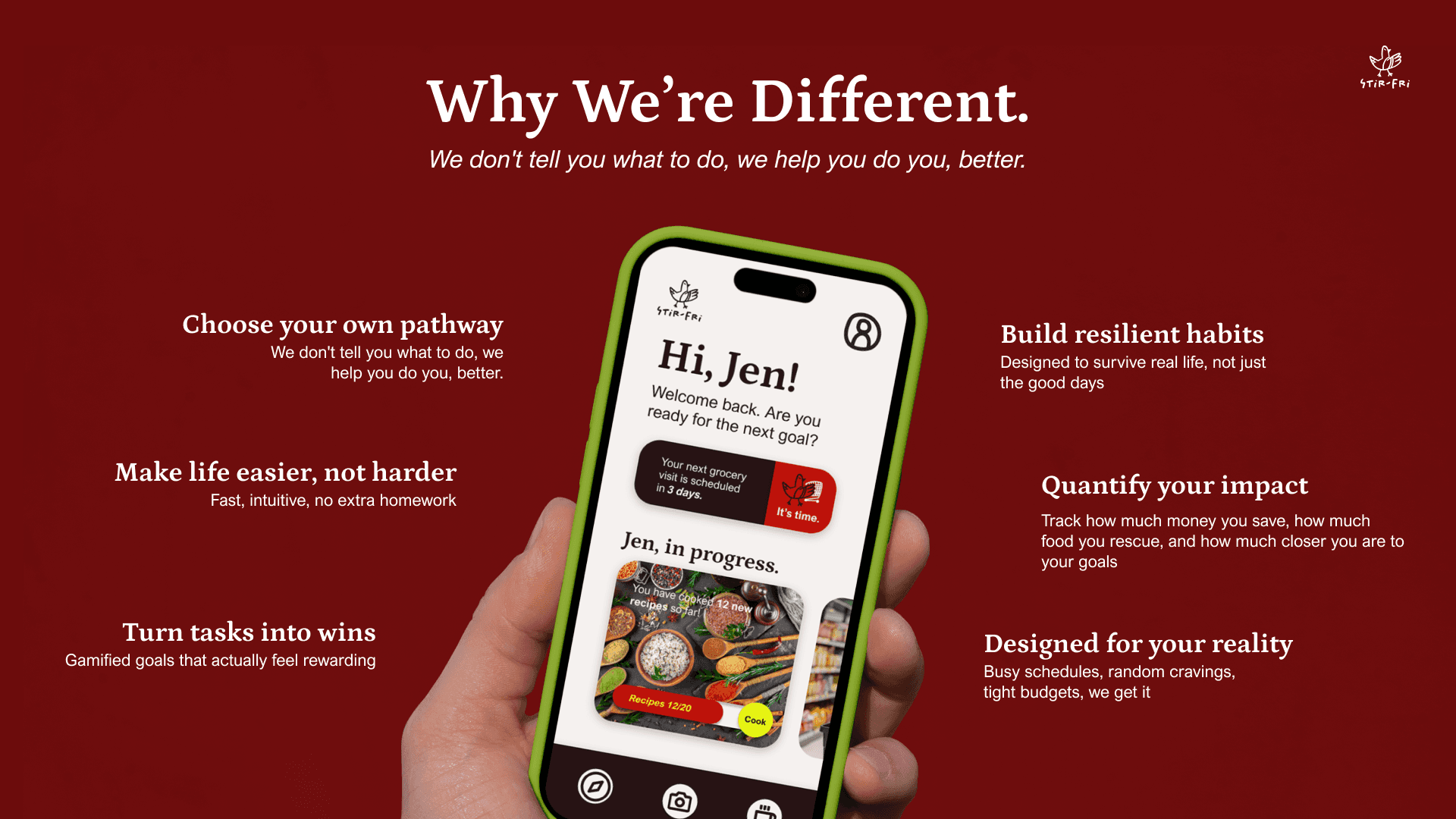
Stir-Fri's main challenge was to be an experience that felt invisible. We as designers and strategists know that habit changing is not a short, instantaneous process that happens overnight, but is something that is built over time.
We wanted to create an experience that builds on existing habits through small nudges, rather than trying to change one's personality or habits immediately.
Further Steps: The Stir-Fri Ecosystem
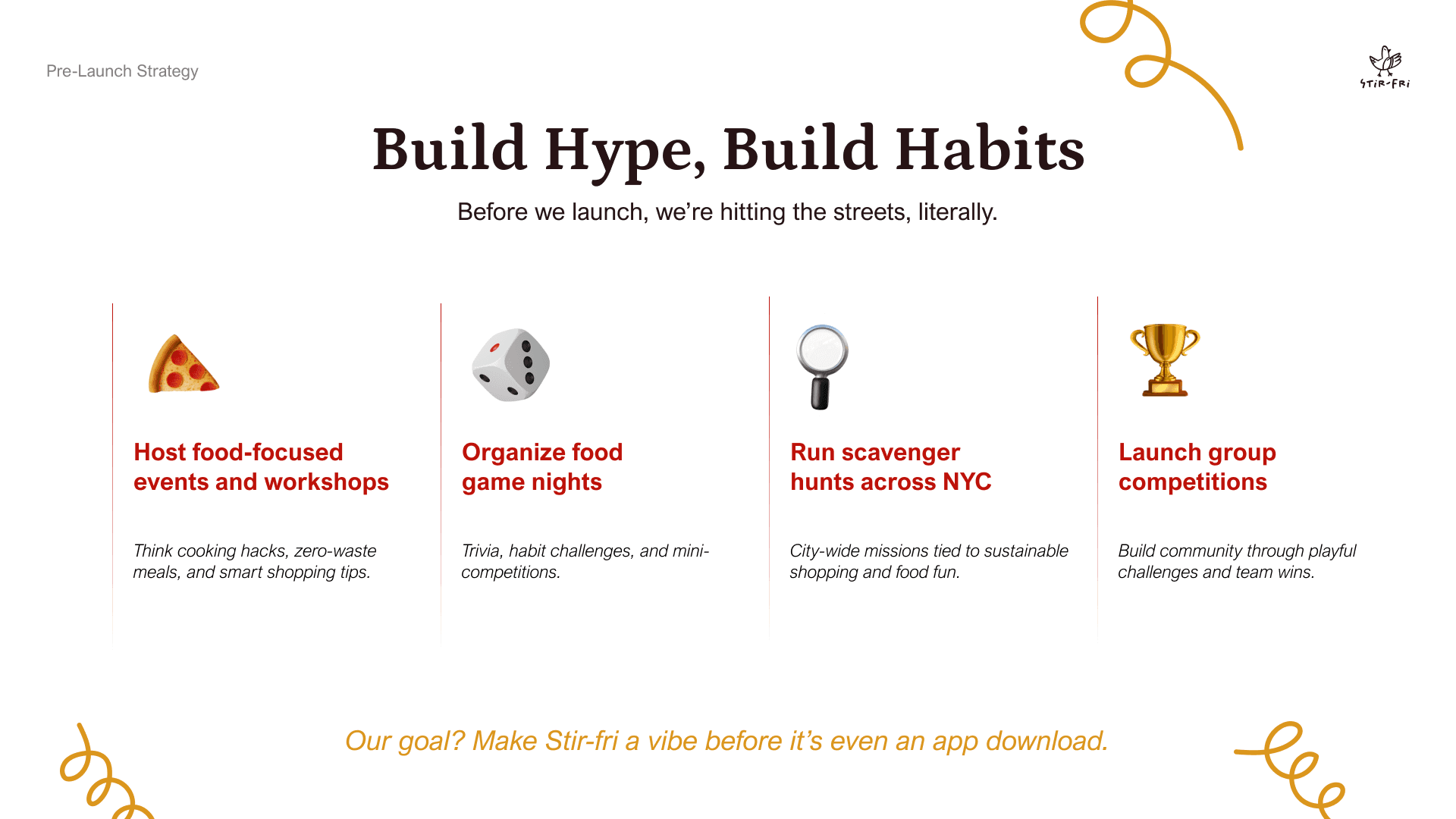
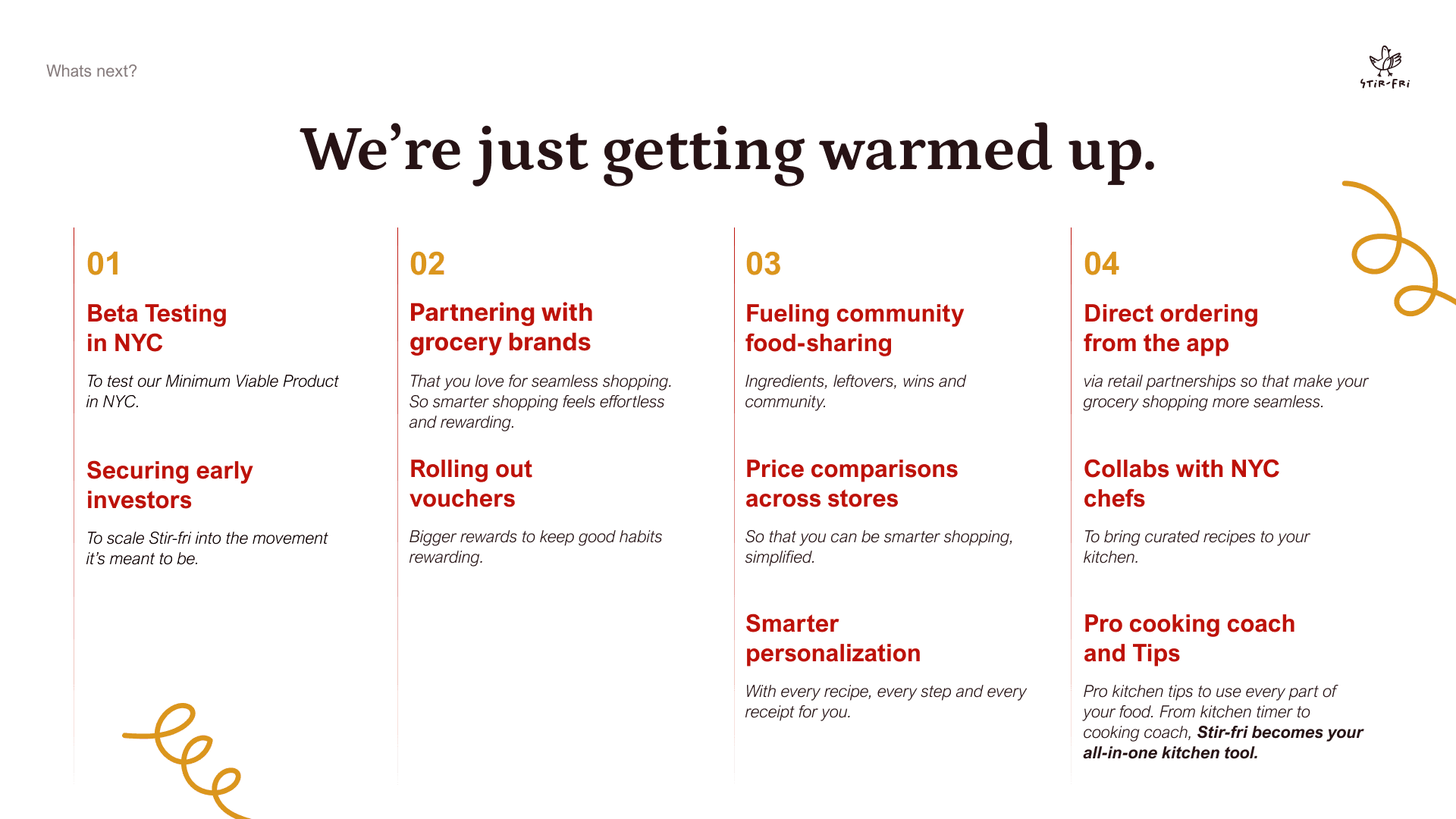
Again, Stir-Fri is meant to be a whole experience. We thought of other strategies that could further sustain building habits.
Reflection
I found this project to be a thoughtful one. We utilized everyday, mundane experiences as a way to tap into one's consumption and spending habits, ultimately to reduce food waste. It focuses solely on habit building, with the idea of bringing improvement to one's routine and daily life.
Stir-Fri is not just a capstone project, but it allowed us designers x strategists to fully strategize on how to utilize small nudges as part of an experience.